


.jpg)
Contact Us
This is your Contact section. Tell website visitors how they can contact you and encourage them to reach out with any questions and comments.

Opening Hours
Mon - Fri
Saturday
Sunday
8:00 am – 8:00 pm
9:00 am – 7:00 pm
9:00 am – 9:00 pm

Bamboo survey from £199+vat
Insurance backed
Guarantee £147
Bamboo treatment from £350+vat
Bamboo Removal
Transform your garden with our expert bamboo removal services starting from just £99+vat. Say goodbye to unwanted growth and reclaim your outdoor space today!
YOU CAN TEXT A PICTURE OF YOUR BAMBOO
AND THAT SAME DAY WE WILL GIVE YOU A PRICE ON YOUR JOB 07799412005
Bamboo and Treatment
Bamboo removal is essential for maintaining a healthy landscape, as uncontrolled growth can lead to overcrowding and negatively affect other plants. Additionally, invasive bamboo species can spread quickly, disrupting local ecosystems and impacting soil health. By removing bamboo, property owners can improve the visual appeal and harmony of their gardens while reducing the risk of potential structural damage to buildings.
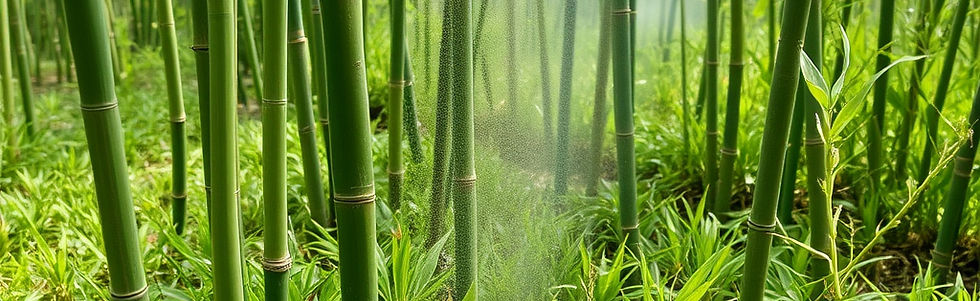


Bamboo removal
A stand of bamboo can look tidy enough above ground and still be spreading hard below it. That is what makes bamboo removal such a common source of neighbour disputes, repeat growth and expensive garden repair. If canes are appearing through lawns, under fencing or close to paving, the real issue is usually the rhizome network beneath the surface - not the stems you can see.
For property owners, the mistake is treating bamboo like an ordinary overgrown shrub. It is not. Running varieties can travel laterally, push into adjoining beds and re-emerge well beyond the original planting area. By the time growth is obvious, the spread is often wider than expected.
Why bamboo is difficult to remove
Bamboo becomes a problem because the visible growth tells only part of the story. The canes may be cut back in an afternoon, but underground rhizomes can remain alive and continue to send up new shoots. In some cases, previous attempts at removal make the job harder by breaking the rhizomes into sections and leaving viable material scattered through the soil.
There is also an important distinction between clumping and running bamboo. Clumping types tend to stay more contained, while running bamboo is far more likely to travel aggressively. If the species has not been identified properly, removal plans can be either excessive or far too light. That matters when bamboo is close to patios, retaining walls, outbuildings or boundary lines.
What proper bamboo removal involves
Effective bamboo removal starts with inspection, not excavation. The first step is to establish the likely spread area, how close the growth is to structures and whether it may already have crossed a boundary. On larger or more sensitive sites, this should be documented clearly so there is a record of what was found and where.
Once the extent is understood, removal usually involves a combination of cutting back top growth, excavating rhizomes and monitoring for regrowth. In straightforward cases, physical removal may be enough. Where rhizomes are deeply embedded, intertwined with roots from other planting, or have moved under hard landscaping, a staged treatment approach is often more realistic.
This is where property owners can save themselves time and cost by getting specialist advice early. Digging blindly can damage drains, edging, membranes and paving, while still leaving live rhizome in the ground.
Bamboo removal near boundaries needs extra care
Boundary spread changes the job completely. If bamboo has moved under a fence or wall, removal is no longer just a gardening issue - it becomes a property risk issue. You may need clear evidence of where the infestation sits, how far it extends and what remedial action is appropriate.
For buyers, sellers and landlords, that paperwork can matter almost as much as the treatment itself. If there is a question over encroachment, prior management or ongoing liability, informal reassurance is rarely enough. A measured site assessment, photographic evidence and a written report give you something tangible to work from.
That same principle applies if bamboo is close to neighbouring land. Removing visible growth on your side without addressing the source can lead to quick reinfestation. Equally, carrying out work without understanding ownership or spread can create avoidable conflict.
DIY removal vs specialist treatment
Some homeowners can manage small, isolated bamboo growth themselves, particularly if it is young, accessible and clearly contained. Even then, the key is persistence. One round of cutting is rarely enough, and missed rhizome can restart the problem.
DIY becomes much less sensible when bamboo is mature, has been in place for years, sits near structures or appears to have spread across more than one part of the garden. The labour is heavier than most people expect, disposal can be awkward, and incomplete removal often means paying for the same job twice.
A specialist approach is usually the better option where certainty matters - for example before a sale, during a purchase, or when a landlord or property manager needs a defensible record of the issue and the remedial plan. That is where a formal survey process adds real value.
When a survey makes sense before bamboo removal
If the growth is extensive or the site is sensitive, a survey should come before any major works. A proper inspection can map the affected area, record spread near beds and fence lines, and provide photographic evidence of current conditions. That creates a clear starting point for treatment and helps avoid disputes later.
For property owners in London and the south of England, this kind of documented approach is familiar in invasive plant management for a reason. Fast reporting, measured observations and structured treatment planning reduce uncertainty. They also help owners make informed decisions rather than guessing at the scale of the problem.
Japanese Knotweed Group Ltd works in this way because invasive plant issues rarely stay simple for long. What owners usually need is not just removal, but clarity - what is present, how serious it is, what the next step should be, and how to protect the value and usability of the property.
If bamboo is starting to dominate a garden, reappearing after cutting, or moving towards a boundary, do not wait for another growing season to confirm it is spreading. Early action is usually cheaper, cleaner and far easier to control